
Economic Outlook: Mixed Signals on Inflation
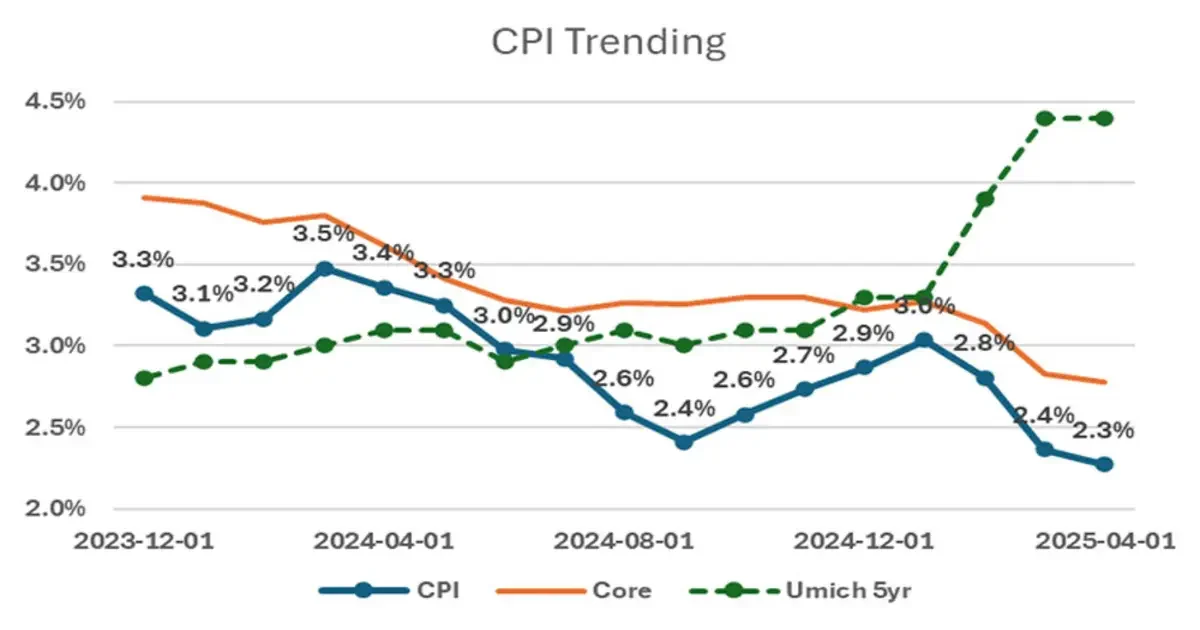
The U.S. economy is experiencing a period of both improvement and uncertainty, with inflation showing signs of moderation but ongoing concerns about economic growth. The April Consumer Price Index (CPI) came in at 2.3%, marking a third consecutive month of decline and the lowest print in over four years. While this decline is encouraging, inflation expectations remain relatively high among consumers, with the University of Michigan’s 5-year inflation expectation survey still at 4.4%. This indicates that many individuals continue to anticipate price increases, even as broader inflation pressures subside.
Looking ahead, inflation could remain flat or even rise slightly due to “base effects” — the mathematical impact of comparing current inflation to lower levels from last year. This means that any increase in prices now could push the year-over-year inflation numbers higher, even if prices are not rising as rapidly in real terms. The challenge for policymakers lies in balancing the ongoing need to control inflation while also addressing the risks of a potential economic slowdown. This delicate balancing act continues to create an air of uncertainty, as the Federal Reserve and other economic players work to determine the right course of action without derailing the recovery.
Federal Reserve and Interest Rate Environment
The Federal Reserve held rates steady at its May 7 meeting, leaving the outlook for the near future uncertain. Fed Chairman Jerome Powell noted ongoing concerns about balancing inflation control with economic slowdown risks. The market currently expects little chance of rate cuts through June, with the possibility of a 35% chance in July and a more likely 75% chance in September. This ambiguity suggests that the economy remains in a cautious stance, and the potential for further rate increases later in 2025 could influence housing affordability and borrowing conditions.
Interest Rates and Mortgage Markets
The 10-year U.S. Treasury yield has risen to approximately 4.5%, the highest level since February 2025, contributing to mortgage rate fluctuations. While mortgage rates have not seen drastic movements in recent weeks, the correlation between the Treasury yield and mortgage rates indicates that homebuyers will continue to face moderately higher borrowing costs. Recent mortgage rates are hovering around 6.5%, reflecting the broader economic uncertainty.
Housing Market Implications
For real estate professionals, the current environment presents both challenges and opportunities. As rates remain elevated, prospective buyers may feel squeezed, especially in higher-priced markets. However, the slowing inflation and steady job market could support demand for homes in more affordable areas or those with stable price growth.