
As we move deeper into the summer selling season, market conditions continue to evolve. Here’s a quick look at the latest economic trends, mortgage rates, and what they mean for your clients.
Economic Outlook: Inflation Eases Into a Healthier Range
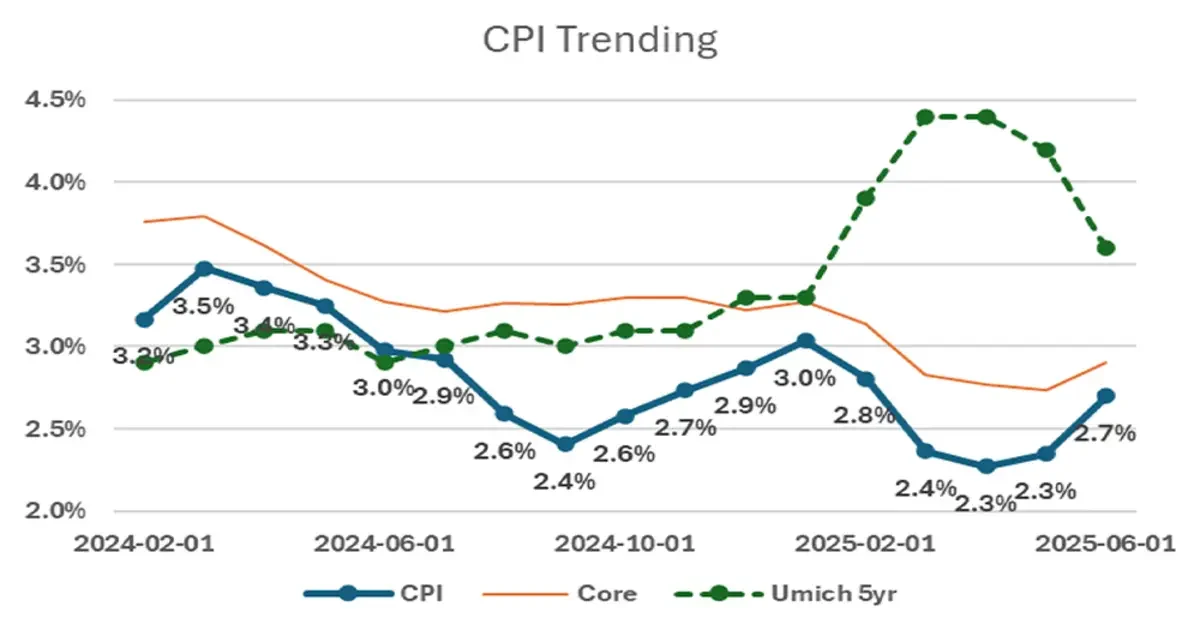
Inflation data continues to move in the right direction. June’s Consumer Price Index came in as expected at 2.7% year-over-year—just above the Fed’s 2% target, but much improved from the peaks we saw in recent years. Encouragingly, consumer inflation expectations are trending downward, signaling growing confidence in price stability. While the labor market remains solid and rate cuts aren’t likely just yet, the overall outlook suggests the Fed is gaining more flexibility—and that’s good news for the housing market heading into the fall.
Interest Rate Environment: Holding Steady, but Watch for Swings
Mortgage-related interest rates have been mostly steady, but there’s still uncertainty. The 10-year Treasury yield recently got close to important levels (like 4.5%) before dropping back to around 4.34%. This shows that markets are torn between signs of slowing growth and ongoing inflation. The Federal Reserve is expected to keep rates unchanged for now, but there’s a growing chance of a rate cut in September. As more data comes in, we could see sudden changes—so agents and clients should be prepared for movement.
Mortgage Rates: Still Elevated, But Stable
Conforming mortgage rates remain elevated, with the 30-year fixed hovering between 6.55%–6.75% in recent weeks. While not as volatile as earlier in the year, these rates continue to pressure affordability and buyer motivation. However, stability—even at higher levels—has allowed many borrowers to recalibrate and re-enter the market with more realistic expectations.
What This Means for Real Estate Agents
Clients are adjusting to a “higher-for-longer” interest rate environment. Buyers who are still actively shopping tend to be more serious and financially prepared. Meanwhile, sellers should be guided to price strategically as affordability caps keep a ceiling on buyer purchasing power. Rate volatility is still in play, so close lender partnerships and proactive rate-lock strategies remain essential.